

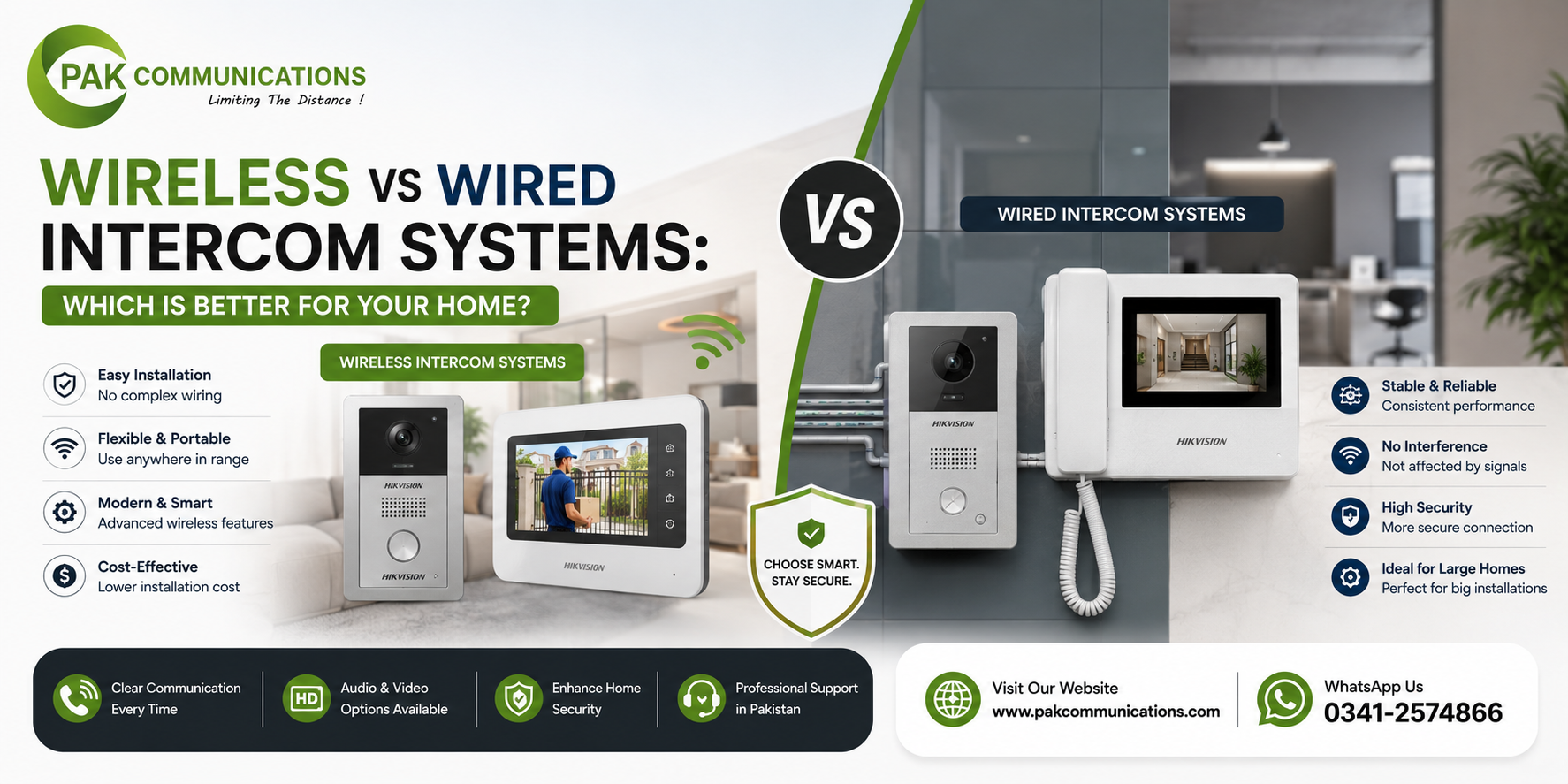
So you have finally decided to install an intercom at your home. The moment you visit a shop or browse online, the very first question you face is this: wired or wireless? Both options do the same basic job, yet they differ in installation, reliability, and cost, and choosing the wrong one for your building can lead to regret later.
If you are completely new to this topic, first read our guide on what is an intercom system, then come back to this comparison. In this article, we will compare wired and wireless intercoms in detail so that by the end, you will know exactly which one suits your home.
Wired and Wireless Intercoms at a Glance
A wired intercom connects the outdoor unit at your gate to the indoor units in your rooms through physical cables. The signal travels through these wires, which makes communication stable and consistent.
A wireless intercom needs no cabling between units. The outdoor and indoor units communicate through radio or digital signals, so installation is quick and your walls stay clean.
Here is a quick summary before we go into detail:
| Feature | Wired Intercom | Wireless Intercom |
|---|---|---|
| Installation | Needs cabling and drilling | Quick, no drilling needed |
| Signal stability | Very stable, no interference | Can weaken through thick walls |
| Audio and video quality | Consistently clear | Good, depends on signal strength |
| Best for | New construction, large houses | Completed or rented homes |
| Relocation | Difficult | Easy |
| Maintenance | Very low | Battery checks in some models |
Now let us look at each type closely.
Wired Intercom Systems: Pros and Cons
Advantages of Wired Intercoms
- Rock solid signal: Since the connection runs through cables, there is no interference from walls, WiFi routers, or other devices. The line stays clear every single time.
- Better audio and video quality: Wired models deliver consistent sound and picture quality because the signal never drops or weakens.
- No batteries to worry about: Indoor units run directly on the wiring and power supply, so you never have to replace or recharge anything.
- Longer lifespan: Wired systems usually outlast wireless ones because they have fewer signal-related and battery-related issues.
- Ideal for large setups: If your house has many rooms or floors and you need several indoor units, wiring handles the load reliably.
Disadvantages of Wired Intercoms
- Installation effort: Cables need to run from the gate to every indoor unit. In a completed house, this means drilling, casing, and visible wiring in some areas.
- Higher installation cost: The device itself may be affordable, but cabling material and labor add to the total expense.
- Hard to relocate: Once installed, moving a unit to another room is a project, not a five-minute task.
Wireless Intercom Systems: Pros and Cons
Advantages of Wireless Intercoms
- Quick and clean installation: A wireless intercom can be up and running within minutes. There is no drilling, no cabling, and no mess on your walls.
- Perfect for completed and rented homes: If your house is already built or you live in a rented property, wireless is the practical choice since landlords rarely allow wall drilling.
- Easy to relocate: Shifting a unit from the lounge to the bedroom takes no effort at all. You can even take the whole system with you when you move houses.
- Portable handsets: Many cordless intercom models let you carry the handset around the house, so you never miss a gate call even from the kitchen or backyard.
Disadvantages of Wireless Intercoms
- Signal range limits: Every wireless intercom has a maximum range. In very large houses, units placed far apart may face weak signals.
- Wall interference: Thick concrete and brick walls, which are standard in Pakistani construction, can reduce signal strength between floors.
- Battery dependence: Some wireless models run on batteries, which means occasional recharging or replacement is part of the routine.
Cost Comparison: Wired vs Wireless
When it comes to cost, the comparison has two sides. Wired intercom units are often cheaper to purchase, but the cabling material and installation labor increase the final amount, especially in completed houses. Wireless intercom units may cost slightly more upfront, but installation is nearly free since there is nothing to wire.
In simple words, wired saves on the device but spends on installation, while wireless spends on the device but saves on installation. The final difference is usually smaller than most buyers expect.
You can compare the latest wireless intercom price in Pakistan along with wired models on our intercom collection page.
Which One Should You Choose?
Here is the simple decision guide.
Choose a Wired Intercom If:
- You are constructing or renovating your house and cabling can be done during the work
- You want maximum reliability with zero signal issues
- Your house is large and needs many indoor units across multiple floors
- You prefer a system that runs for years without battery maintenance
Choose a Wireless Intercom If:
- Your house is already completed and you want to avoid drilling
- You live in a rented home or apartment
- You want the system installed and working on the same day
- You like the idea of a portable handset that moves with you around the house
A Note on Pakistani Homes
There is one local factor that deserves special attention. Houses in Pakistan are commonly built with thick brick and concrete walls, and these walls are tougher on wireless signals than the drywall used in many other countries. If your home is double-storey and you plan to place units on different floors, either select a wireless model known for strong range or consider going wired for guaranteed performance.
Load shedding is the second factor. A wired system connected to your UPS keeps working through every power cut without any thought. If you choose wireless, prefer a model with reliable battery backup so your gate communication never goes silent during outages.
Frequently Asked Questions
Do wireless intercoms work through concrete walls?
Yes, but with reduced range. Concrete and brick walls absorb part of the signal, so a model rated for 200 meters in open space may cover much less inside a house. For double-storey homes, choose a wireless model with strong range or test the unit placement before finalizing.
Which lasts longer, wired or wireless intercom?
Wired intercoms generally last longer because they have no batteries and no signal components that wear out. A good wired system can easily serve you for ten years or more, while wireless models also last for years but may need battery replacements along the way.
Can I convert my wired intercom to wireless?
Not directly. Wired and wireless systems use different technology, so conversion is not practical. If you want to switch, the better route is replacing the system with a new wireless set, which is usually affordable and quick to install.
What is the range of a wireless intercom?
Range varies by model. Basic units cover around 100 to 300 meters in open space, while stronger models go further. Always remember that walls and floors reduce the effective range, so buy a model with more range than you actually need.
Is a wireless intercom secure?
Yes. Modern wireless intercoms use digital signals with secure channels, which makes interception extremely difficult. For everyday home use, a quality wireless intercom from a reliable brand is completely safe.
Conclusion
The rule of thumb is simple. If you are building or renovating your house, go wired for lifelong stability. If your house is completed or rented, go wireless for quick and clean installation. Both options give you the same core benefit, which is knowing exactly who is at your gate before you open it.
Still confused between the two? Contact Pak Communications and our team will recommend the perfect intercom for your home based on your building type and budget.